
You know what’s better than trying to sell something? When a customer takes time to tell you what’s really working in their factory—without you asking.
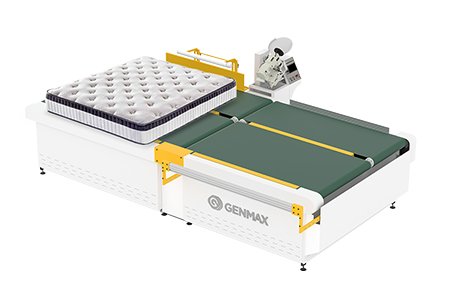
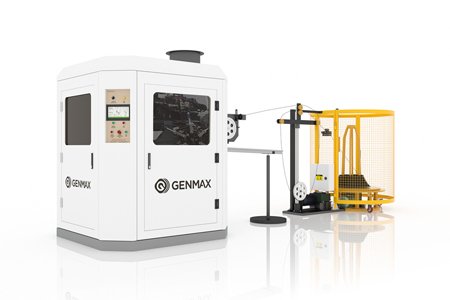
That’s exactly what happened recently with one of our mattress making clients in Mexico. No planned visit, no formal review. Just honest feedback about their CJ4A Panel Cutting with Conveyer Machine.
After 15 years in this business, I’ve learned that feedback you don’t ask for is usually the most honest kind. So when these comments came to me, I listened closely. What I found goes beyond just how one machine works—it shows important trends in modern mattress making.
Here’s what our Mexico customer highlighted about their CJ4A system:
“Stable, vibration-free operation with low noise and high efficiency.”
Now, those might sound like marketing buzzwords. But coming from someone running the equipment daily, they mean something specific. Stable operation means consistent cuts.
“Conveyor belt mechanism is convenient for assembly line operation.”
This is the kind of detail that matters in actual production. When you’re processing quilted panels and borders all day, material handling becomes a bottleneck fast.
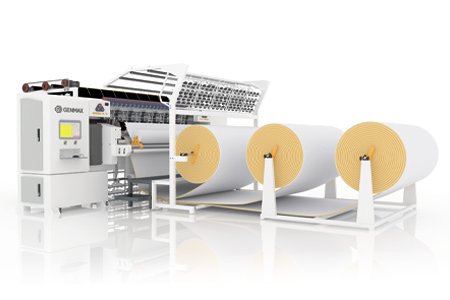
“Designed to work with quilting machine or on its own.”
Flexibility. In mattress manufacturing, production requirements change constantly. Sometimes you need integrated cutting right off the quilting line. Sometimes you need standalone cutting for rework or different materials.
Mexico’s mattress business has grown a lot over the past ten years. The Mexican Association of Mattress Manufacturers (AMMAC) says local production went up by 23% from 2019 to 2023 (source: AMMAC Industry Report 2024).
Key market drivers include:
This growth creates pressure for manufacturers to optimize operations. Equipment that can’t keep up gets replaced quickly.
Our customer’s feedback aligns perfectly with these market demands. They need equipment that delivers consistent results without constant maintenance attention.
Quilted panels represent the most demanding cutting application in mattress manufacturing. The materials combine multiple layers with varying densities and thicknesses.
Typical quilted panel composition:
Border cutting requires different technical considerations than panel processing. Borders are typically single-layer materials requiring precise dimensional accuracy.
Border cutting challenges:
Customer feedback focusing on “high efficiency” translates to measurable economic benefits. Efficient cutting operations impact several cost categories.
Equipment performance directly impacts market competitiveness in Mexico’s growing mattress industry. Companies with efficient operations can offer better pricing or higher margins.
According to McKinsey’s Manufacturing Productivity Report 2024, companies with optimized cutting operations show 12-18% better profitability than industry averages (source: McKinsey Global Institute, “Manufacturing Productivity Trends,” 2024).
Cutting quality directly affects subsequent manufacturing steps. Poor edge quality creates assembly problems, increases labor time, and impacts final product appearance.
Quality metrics affected by cutting performance:
If you have problems with cutting that slows down work, cuts that aren’t the same every time, or machines that don’t work well together, let’s have a real talk about what might help your factory.
Real customer feedback beats marketing claims every time. Let’s talk about what actually works in your production environment.
Sources:
Mexico Mattress Market Size & Outlook, 2024-2030
International Sleep Products Association
McKinsey Global Institute